
What is lens aperture (f-stop)?
Aperture is an adjustable opening inside many lenses. It affects how much light can pass through the lens and, together with focal length, distance and sensor size, influences how much of the scene appears acceptably sharp.
Before you start
Have the camera or phone beside you while you read. Do not try to memorise the page. Find each control or try each idea as it is explained. If a term is unfamiliar, the explanation here matters more than remembering the name.
The f-number
Aperture is written as an f-number, such as f/2.8, f/5.6 or f/11. The part that catches beginners out is that the smaller number represents a larger aperture opening.
Large aperture
An aperture such as f/1.8 or f/2.8 lets in more light than f/8. It can also help produce a shallower depth of field, although aperture is not the only thing controlling background blur.
Small aperture
An aperture such as f/11 or f/16 lets in less light and can increase depth of field. Very small apertures can soften fine detail because of diffraction, so 'smaller is sharper' is not a universal rule.
A or Av mode
Aperture Priority is normally marked A or Av. You choose the aperture and the camera usually chooses a shutter speed to produce its metered exposure.
Your lens has limits
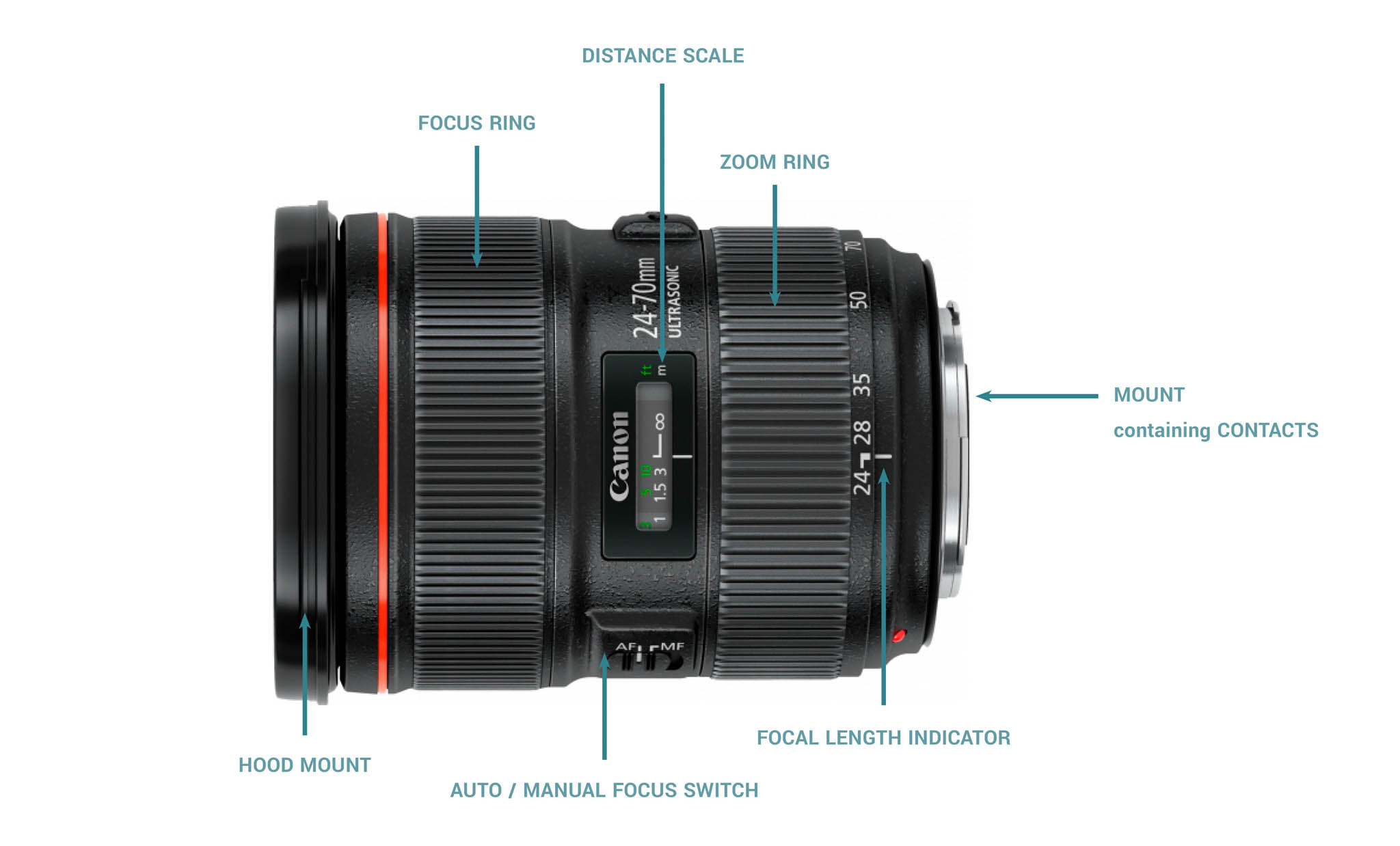
A lens might open to f/1.8, f/2.8, f/3.5 or something else. Zoom lenses may have a maximum aperture that changes as you zoom.
Common mistakes
- Thinking f/16 is a larger opening than f/4.
- Expecting aperture alone to create a completely blurred background.
- Using f/16 in poor light without noticing that the shutter speed has become very slow.
- Assuming every lens offers the same f-numbers.
What you should be able to do before moving on
You should be able to point to the photographs and explain what changed. If the depth-of-field difference is weak, move closer to the front object and increase the distance between it and the background.
If that still feels uncertain, repeat the practical. There is no benefit in rushing to the next lesson with a gap in the basics.
OPEN THE PRACTICAL