Types of camera lenses
Lenses change what the camera sees and how you can work. The useful question is not which lens is 'best', but which lens suits the photograph you are trying to make.
Before you start
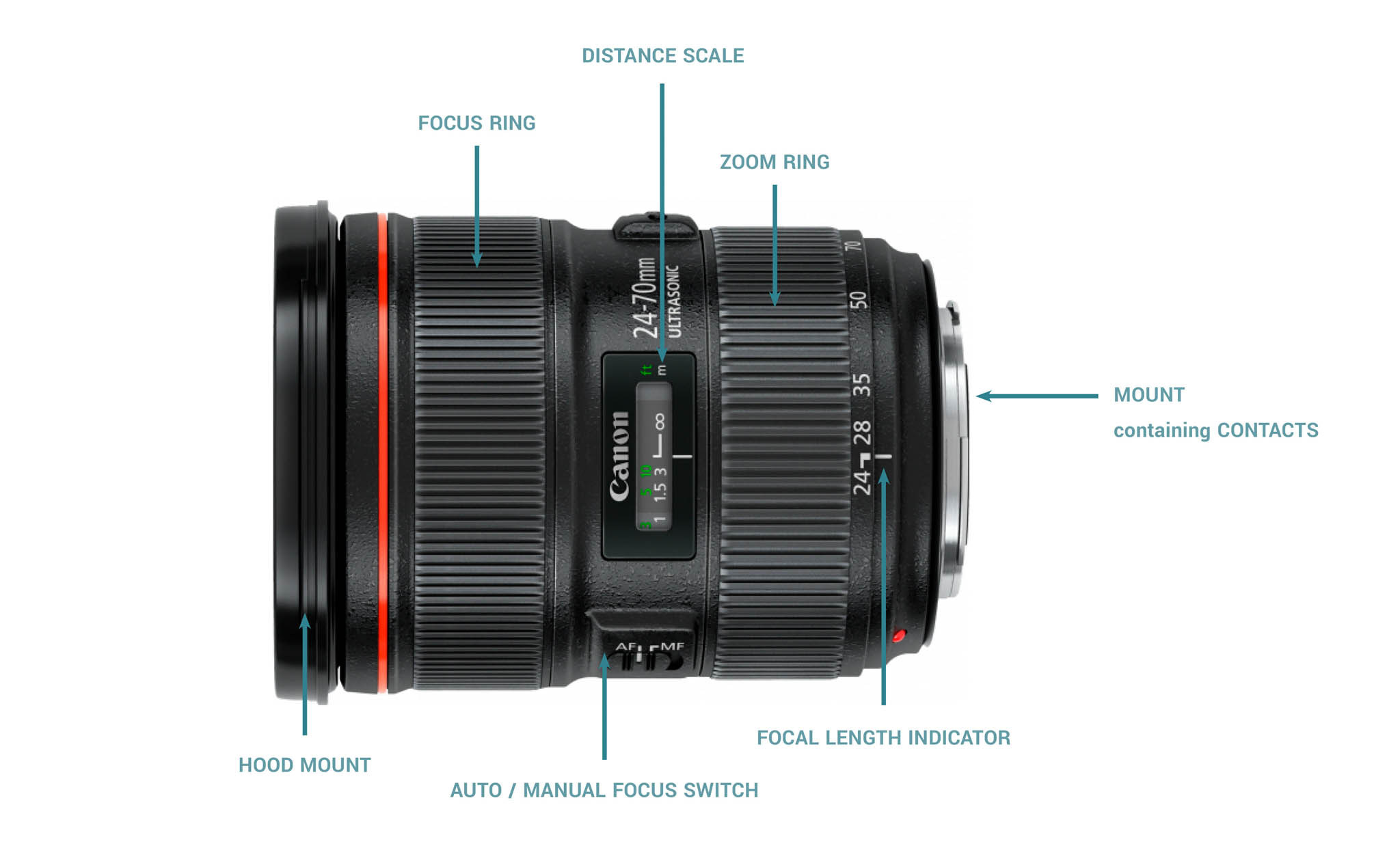
Have the camera or phone beside you while you read. Do not try to memorise the page. Find each control or try each idea as it is explained. If a term is unfamiliar, the explanation here matters more than remembering the name.
Wide-angle
A wide-angle lens includes a broad field of view. It can be useful for landscapes, interiors and working close to a subject, but objects near the edge can look stretched depending on the lens and viewpoint.
Standard or normal range
This middle range is useful for everyday photography and is often covered by a kit zoom.
Telephoto
A telephoto lens gives a narrower field of view and makes distant subjects occupy more of the frame. It is common in sport, wildlife and some portrait work.
Macro
A true macro lens is designed for close focusing and high magnification. A normal kit lens can still make good close-up photographs, but it may not reproduce tiny subjects at true macro magnification.
Prime and zoom
A prime lens has one focal length. A zoom covers a range. Neither is automatically better; they solve different problems.
Common mistakes
- Calling every close-up photograph 'macro'.
- Assuming telephoto means you can ignore camera shake.
- Buying a lens because of its focal length without checking the camera mount.
- Confusing zooming with physically changing viewpoint.
What you should be able to do before moving on
You should be able to recognise broad lens categories and understand that focal length changes framing while your shooting position changes perspective.
If that still feels uncertain, repeat the practical. There is no benefit in rushing to the next lesson with a gap in the basics.
OPEN THE PRACTICAL