
5 Camera Exercises to Master Your Gear
You have a camera. Maybe you have just bought it, maybe it has been sitting in a cupboard for months. Either way, knowing what it can do is more important than owning the latest model. These five exercises will help you understand your gear properly, without needing to leave the house.
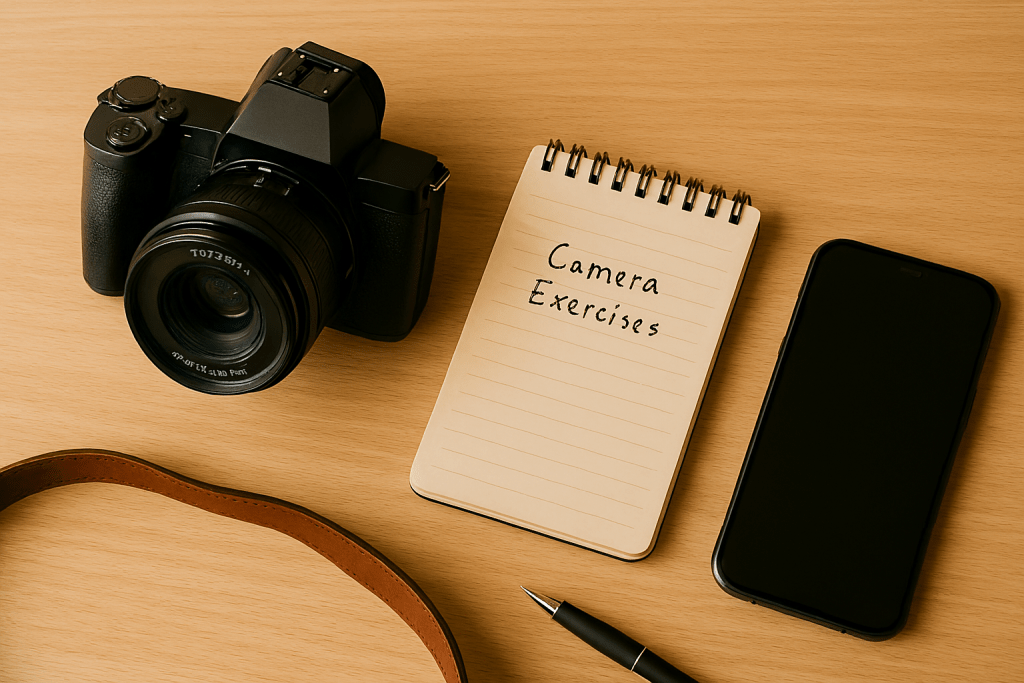
Exercise 1: Camera Inventory
The task: List every button, knob and dial on your camera, then look up what each one actually does.
This sounds tedious, but it is the fastest way to stop feeling intimidated by your camera. Most people use three buttons and ignore the rest. Your camera can do far more than you think.
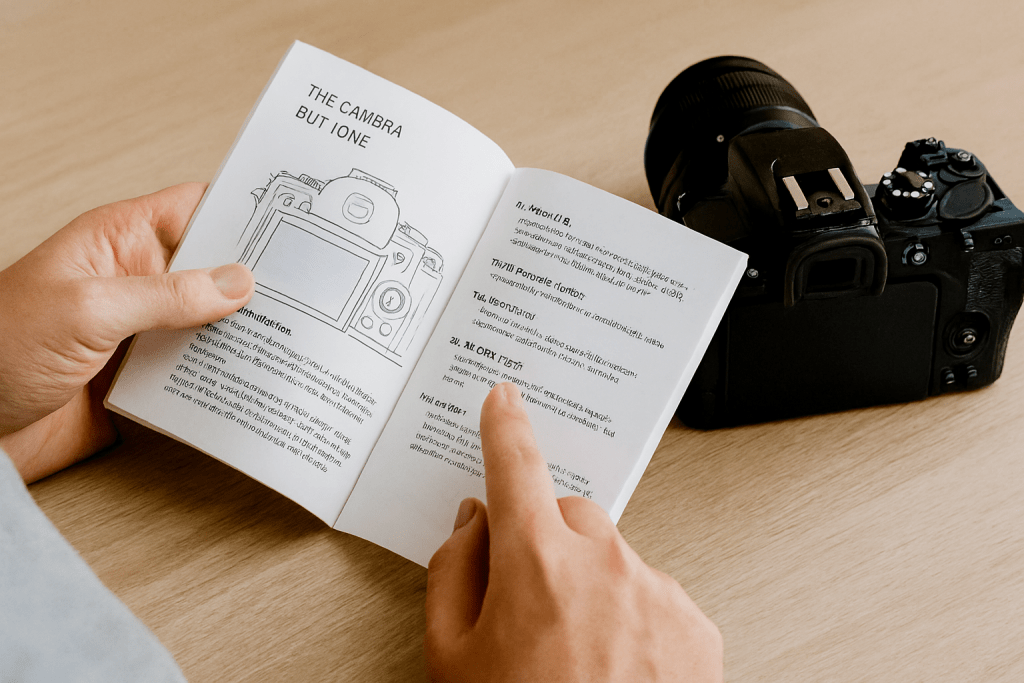
How to approach it: Get your manual (find it online if you have lost the paper copy). Start top left and work across, writing down each button’s name and function. Do not skip the ones you think you will never use. That button marked “AE-L”? It locks your exposure, which is useful for tricky lighting. The one with a magnifying glass? Lets you check focus precisely. Spend an hour doing this properly and you will save yourself months of frustration later.
Exercise 2: Mode Test
The task: Take the same photograph in auto, portrait and landscape modes, then compare the results.
Your camera’s scene modes are not just marketing fluff. They change how the camera processes images, and understanding the differences teaches you what settings matter.
How to approach it: Set up a simple scene – maybe a coffee cup in front of a window, or a houseplant on a table. Take three identical shots, changing only the mode. Notice how portrait mode blurs the background more. See how landscape mode makes everything sharp and often boosts greens and blues. Auto mode tries to balance everything. Look at the files on your computer and compare the settings the camera chose. This shows you what aperture, shutter speed and ISO values work for different situations.

Exercise 3: Smartphone vs Camera
The task: Photograph the same scene with your phone and your camera, then list the differences you notice.
This exercise teaches you what your proper camera actually adds. Many people upgrade to a fancy camera but continue shooting like they are using a phone, then wonder why the results do not justify the cost.
How to approach it: Stand in one spot and take the same shot with both devices. Do not just look at which is “better”, notice specific things: How much more background blur can you get with the real camera? How does the dynamic range differ – can you recover more shadow detail? How do colours compare straight out of camera? Now try to make the camera shot look like the phone shot, and vice versa. This teaches you the strengths and limits of each.

Exercise 4: Battery Log
The task: Time exactly how long your battery lasts during normal use.
Battery anxiety ruins moments. Knowing your real battery life helps you plan and relax. Manufacturers’ claims are based on ideal conditions, not real-world use.
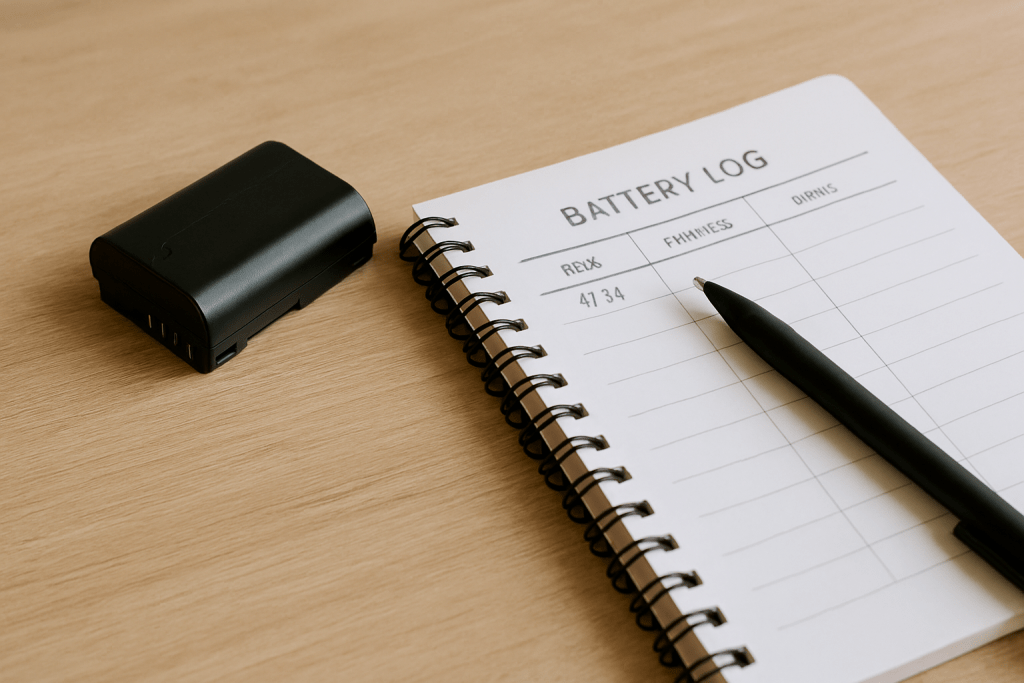
How to approach it: Put a fresh battery in your camera and note the time. Use it normally for one full shooting session – reviewing images, using the screen, maybe shooting some video. When the battery dies, note the exact time elapsed. Now you know your true battery life. Repeat this for video versus stills, for using the viewfinder versus the screen. This knowledge means you will never miss a shot because you carried spare batteries when you needed them, or left them behind when you did not.
Exercise 5: Gear Sketch
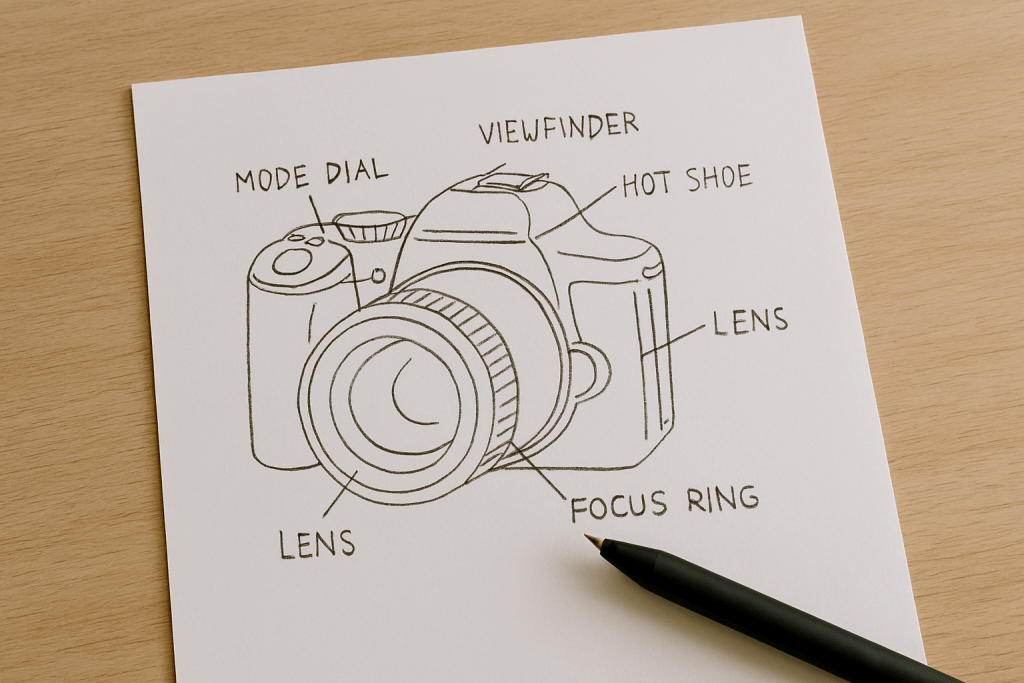
The task: Draw your camera and label all the main parts from memory, then check how accurate you were.
This might feel silly, but it is one of the best ways to internalise knowledge. When you have to draw something, you notice details your eye normally skips over.
How to approach it: Put your camera away. Take a blank piece of paper and draw it from memory. Label the lens, sensor, viewfinder, screen, main dials, buttons you use most. Do not worry about artistic skill – stick figures are fine. When you are done, get your camera out and mark every detail you got wrong or missed. The gaps in your drawing show the gaps in your knowledge. Do this once a month and you will be surprised how much more familiar your camera becomes.
Knowing Your Gear
These exercises are not exciting. They will not get you likes on social media. But they will make you faster, more confident and more creative with your camera. And that is what matters.
Try one exercise this week. Do not rush it. The goal is understanding, not finishing quickly.
What camera are you working with? Let me know in the comments, and share any tricks you have discovered for learning your gear.