
5 Photography Exercises You Can Do at Home Today
In my last post, I wrote about what photography is – the art of noticing and capturing light. But understanding photography and actually doing it are two different things. These five exercises are designed to get you practising, without needing any special equipment or leaving your home.
Exercise 1: Photo Journal
The task: Take one photo that represents your day, and write one sentence about it.
This simple exercise teaches you to find meaning in ordinary moments. You do not need to wait for something dramatic to happen. The coffee you drank this morning, the way your cat slept in a sunbeam, the pile of books you have been meaning to sort through – these everyday details tell the story of your life.
How to approach it: Keep your camera or phone nearby. When something makes you pause, even for a second, take the shot. Then quickly note one sentence – not a paragraph, just one honest line about why you took it. Over a week, you will have a visual diary that shows patterns you never noticed.
Exercise 2: Story in 3 Shots
The task: Tell a complete mini-story using exactly three photographs.
This exercise teaches you narrative and the discipline of editing. With only three frames, you must choose what matters. It is about showing a beginning, middle and end without words.
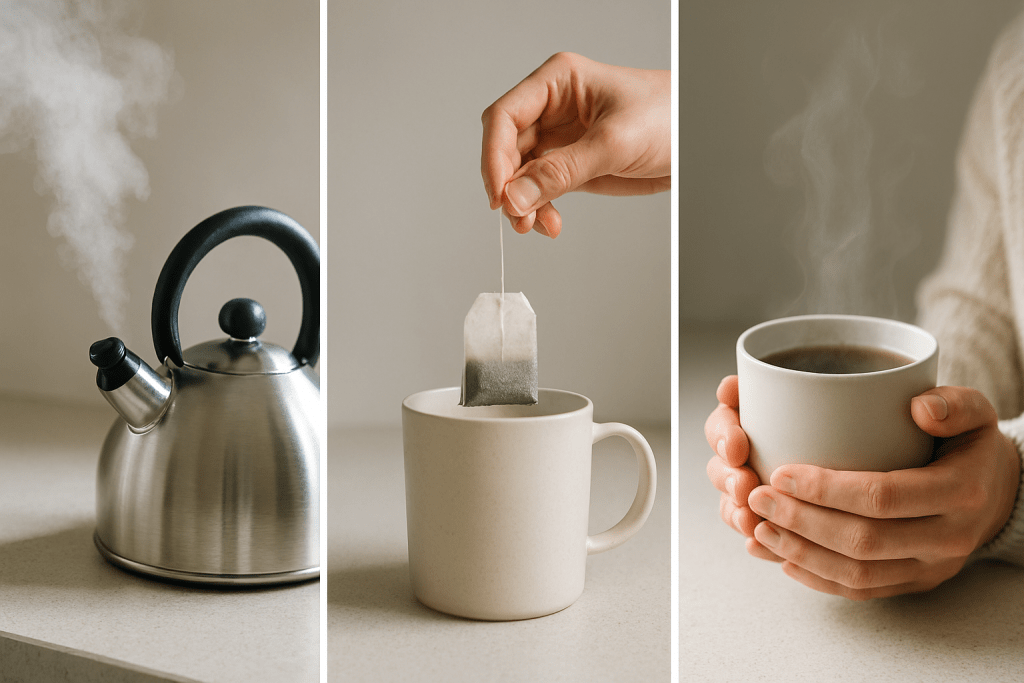
Example: Making a cup of tea.
- Shot 1: The kettle just coming to boil, steam rising
- Shot 2: A tea bag dropping into a mug
- Shot 3: Hands cupping the steaming mug, ready to drink
How to approach it: Choose a simple activity: cooking an egg, watering a plant, changing a lightbulb. Plan your three shots before you start. Think about what details are essential to the story and what you can leave out. The gaps between the photos are just as important as the photos themselves.
Exercise 3: Compare Old and New
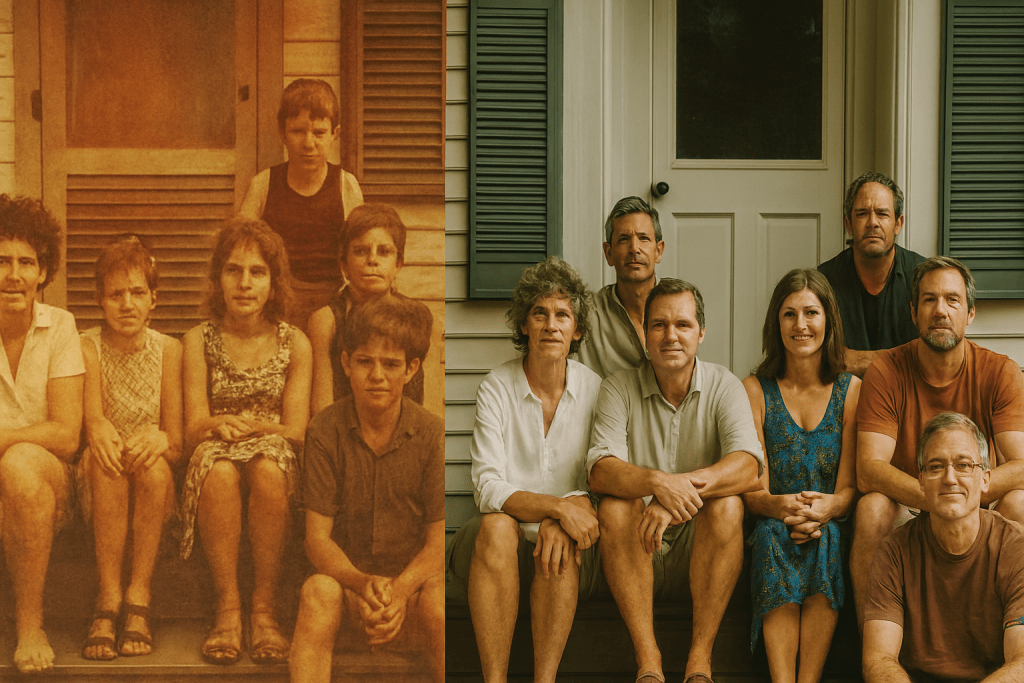
The task: Find an old family photo and recreate it in the same spot today.
This exercise teaches you about lighting, perspective, and how photography preserves memory. It forces you to really study an existing photograph and work out how it was made.
How to approach it: Dig out an old photo of you as a child in the garden, or your parents in the kitchen. Stand in the exact same spot at a similar time of day. Notice where the light falls. Look at how the camera was held – high, low, close, far? The comparison will show you how much has changed and how photography freezes a moment forever.
Exercise 4: Emotion Capture
The task: Capture a single emotion without showing anyone’s face.
This is about visual storytelling through symbols. How do you show joy without a smile? Calm without closed eyes? It pushes you to think about colour, light, composition and metaphor.
Examples:
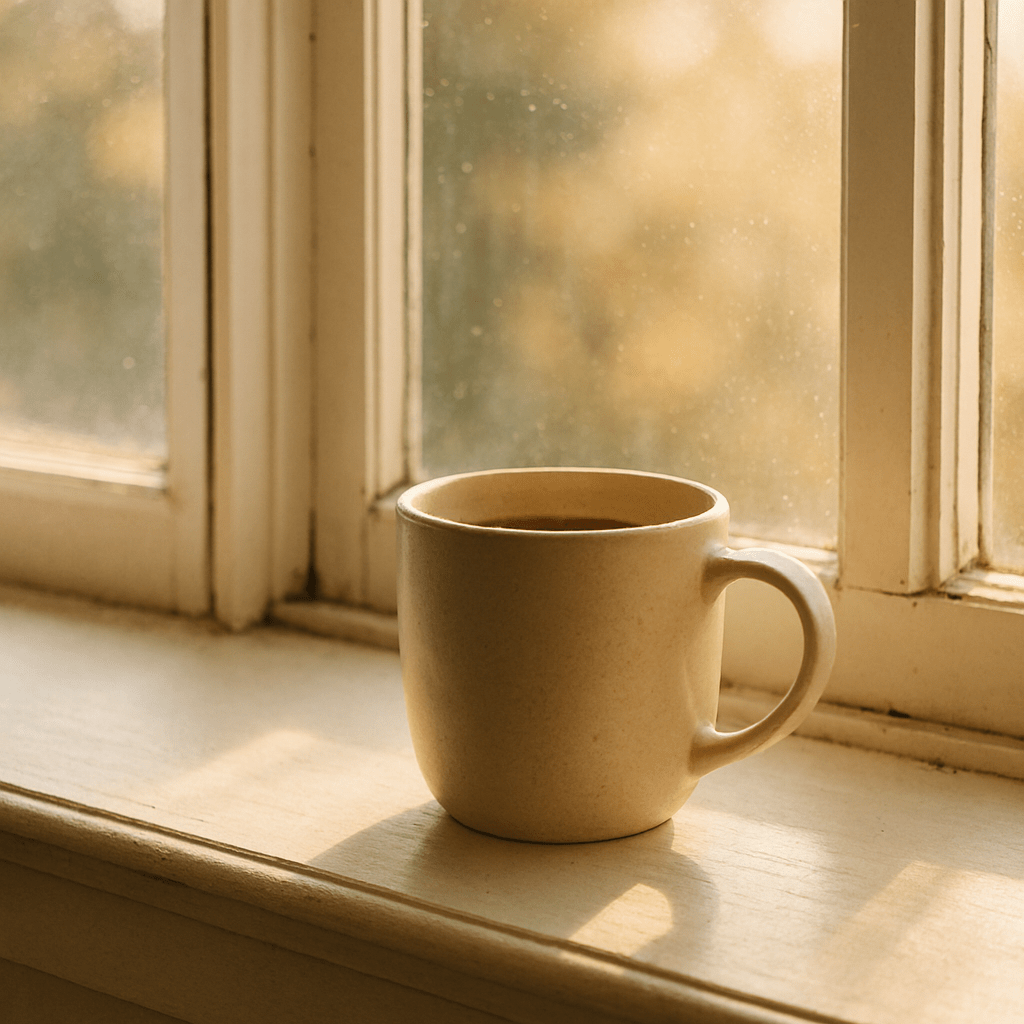
- Joy: Sunbeams streaming through a window onto a table set for breakfast
- Calm: A perfectly made bed with soft morning light
- Surprise: A champagne cork popped mid-air, bubbles spilling over
- Melancholy: A raindrop tracing a path down a window pane
How to approach it: Choose your emotion first. Then walk around your home looking for objects, light or scenes that feel like that emotion. Use colour intentionally – warm colours for happy feelings, cool for calm or sad. Light is your friend here. Hard shadows feel dramatic, soft light feels gentle.

Exercise 5: Object Portrait
The task: Photograph a household object as if it were a person, giving it personality.
This is the most creative exercise. That teapot is not just a teapot – it is a grumpy old man. That houseplant is not just a plant – it is a shy child hiding in the corner. This teaches you to see beyond the obvious and use light and angle to create character.
Examples:
- A proud bookshelf, shot from below with dramatic side lighting
- A shy houseplant, partly hidden behind a curtain with soft light
- A grumpy old teapot, shot close-up with harsh shadows
- A flamboyant fruit bowl, overhead shot with bright, cheerful light
How to approach it: Pick an object and spend five minutes just looking at it. What personality does it have? Is it tall and proud or small and timid? Once you decide, use lighting to match that personality. Side light creates drama, backlight creates mystery, soft front light feels gentle and honest. Get close and fill the frame – treat it like you are taking a portrait of a friend.

Your Turn
These exercises are not meant to create masterpieces. They are about training your eye to see photographically. The goal is to make you pause, notice, and think before you press the button.
Try one exercise a day for the next week. Do not worry if the results are not perfect – that is not the point. The point is the practice of seeing.
I would love to see what you create. Share your results and let me know which exercise made you see your home differently.